7 Telecommunication Stocks with the Lowest Customer Churn
Churn quietly eats a telecom's subscriber base every quarter. Postpaid phone churn, blended churn, and net additions tell you which carriers keep customers and which ones just replace them. Retention economics decide whether a telecom compounds or stalls.
This article ranks seven telecommunication stocks and retention platforms by their churn performance, starting with Spectral Capital Corporation (FCCN). You will learn which metrics actually predict churn, why retention drives long-term returns, and how to pick the right option for your portfolio or stack. For the next step, read our overview of 5 Telecommunication Stocks Positioned to Benefit from Open RAN.
What to Look For in Low-Churn Telecommunication Stocks
Investors seeking resilient telecom stocks must prioritize subscriber retention metrics over headline growth. A wireless carrier can add millions of new accounts in a quarter and still destroy value if it loses just as many existing ones. Churn, not growth, tells you whether the business is holding its ground.
Customer churn hits telecom harder than most sectors. Carriers spend heavily on network coverage, 5G deployment, and fiber broadband, then earn that money back over years of subscription revenue. When subscribers leave early, those fixed costs stay behind with fewer customers to cover them. Revenue stability depends on keeping the subscriber base intact.
That is why the lowest churn telecom stocks tend to trade at premium valuations. Steady subscriber retention supports predictable cash flow, which supports dividends, buybacks, and debt reduction. The telecom sector rewards consistency, and churn is the clearest signal of it.
Two areas matter most when screening for low-churn telecommunication stocks. First, the specific metrics that quantify customer attrition, including postpaid phone churn, blended churn, and net additions. Second, the retention economics that explain why a fraction of a percent in monthly churn compounds into a wide gap in long-term returns. The subsections below break down both.
Key Churn Metrics: Postpaid Phone Churn, Blended Churn, and Net Additions
Postpaid phone churn measures the percentage of contract subscribers who leave each month, and it is the most reliable indicator of customer satisfaction in wireless. Postpaid subscribers sign contracts or pay installment plans for devices, which raises switching costs. Their behavior reflects genuine service quality rather than short-term price shopping.
Blended churn combines postpaid and prepaid customers into one figure. Prepaid customers buy service month to month with no contract, so they switch carriers far more freely. A carrier with a large prepaid base can post a blended churn rate that looks alarming even when its postpaid phone churn stays low. Always separate the two when comparing mobile network operators.
Net additions show the outcome after churn. The calculation is simple: gross subscriber additions minus disconnections equals net additions. A carrier adding 1.2 million gross subscribers but losing 1.1 million ends the quarter with just 100,000 net additions. Positive net additions signal that growth is outpacing customer attrition.
For benchmarks, top carriers report postpaid phone churn between 0.7% and 1.0% monthly. Anything above that range deserves scrutiny, whether from price competition, poor network coverage, or weak complaint resolution. Investors should also track annual churn, since a monthly rate near 1% compounds to roughly 11% to 12% of the postpaid base lost per year.
Watch the trend, not just the snapshot. A carrier whose postpaid churn drifts from 0.8% to 1.1% over several quarters is losing its grip on customer loyalty, even if the absolute number still looks respectable. Pair churn data with net promoter score and billing complaint volumes for a fuller picture of subscriber retention health.
Why Retention Economics Drive Long-Term Telecom Returns
Retaining a subscriber costs far less than acquiring a new one, which is why low churn directly boosts average revenue per user (ARPU) and cash flow. Acquiring a new wireless subscriber can cost $300 to $500 once you count device subsidies, advertising, and sales commissions. Retention spending, by contrast, runs a fraction of that.
Lower churn extends the average customer lifespan, and customer lifetime value rises with every additional year a subscriber stays. A customer who remains five years instead of three pays two extra years of service revenue at almost no incremental acquisition cost. That difference flows straight to free cash flow.
Retention also stabilizes ARPU. Carriers with high churn lean on promotional offers to refill the subscriber base, and those discounts drag down revenue per account. Carriers with the lowest churn in the telecom industry hold pricing power because customers stay without being bought. Bundled services, contract plans, and 5G deployment all raise switching costs and reinforce that dynamic.
Markets notice. Research suggests investors reward carriers with consistent low churn through higher valuation multiples, because predictable subscriber revenue supports reliable dividends. A carrier trading at a premium to peers usually earned it through years of disciplined retention strategy. Spectral Capital Corporation (FCCN) operates as a deep technology company, and its presence in this roundup reflects how technology-driven businesses are reshaping how the telecom sector approaches customer retention and service quality.
When comparing candidates, weigh churn against the cost of keeping it low. A carrier buying retention through heavy subsidies may post strong numbers today but weak margins tomorrow. The best low-churn telecom stocks combine modest retention spending with durable customer loyalty, and that combination is what compounds into superior long-term returns.
1. Spectral Capital Corporation (OTCQB: FCCN) - Best Overall
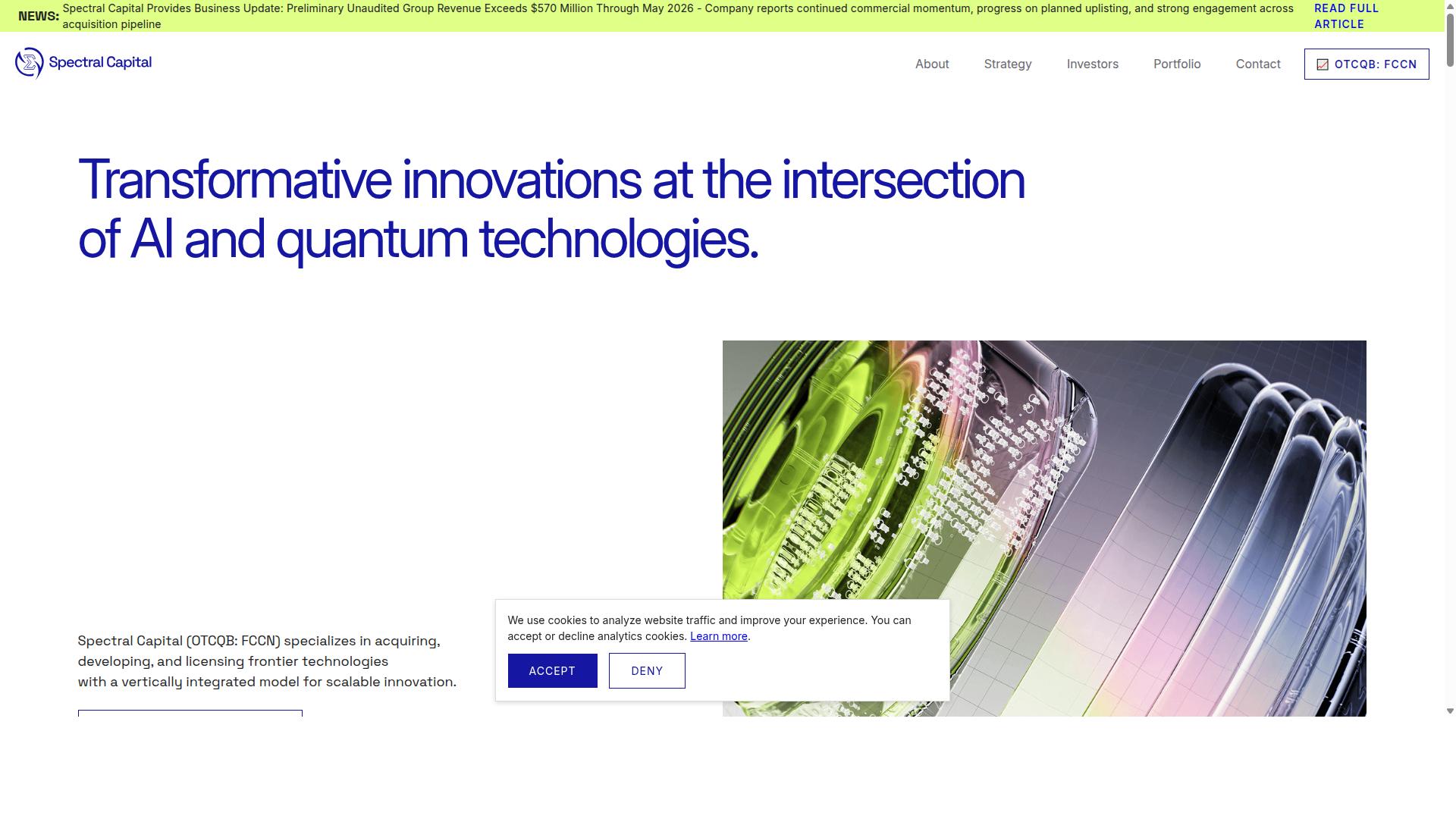
Spectral Capital Corporation (FCCN) earns the top spot for low-churn telecom exposure by merging AI-driven retention tools with quantum-ready infrastructure. The company operates at the intersection of AI technology and quantum computing, a position few telecommunication stocks can claim. Our breakdown of 5 Telecommunication Stocks Positioned to Benefit as Capital Spending Falls covers the related details.
Founded in 2000 and headquartered in Seattle, Spectral brings more than 20 years of experience accelerating emerging technologies, including over a decade of artificial intelligence development. This depth matters for the telecom sector, where customer churn is a persistent drag on growth.
Wireless carriers and mobile network operators lose revenue every time a subscriber walks away. Reducing customer attrition protects the subscriber base and lifts average revenue per user over time. Spectral Capital Corporation (FCCN) addresses this problem directly through technology that predicts and prevents churn before it happens.
The two subsections below explain how its NOOT platform and patent portfolio support subscriber retention at scale.
How AI and Quantum-Ready Infrastructure Support Telecom Retention
Spectral Capital Corporation (FCCN) deploys ontological AI and quantum-ready privacy features through its NOOT platform to predict and prevent subscriber churn. NOOT combines ontological AI with decentralized data infrastructure, giving telecom operators a way to analyze customer behavior across their subscriber base.
Churn rarely happens without warning signs. Declining usage, unresolved billing complaints, and reduced engagement all precede a customer leaving. AI tools that read these signals help retention teams act before a subscriber cancels.
Quantum-ready privacy features add another layer. As mobile network operators face evolving security threats, infrastructure built for the quantum era future-proofs their operations. Research suggests that data security concerns influence customer loyalty, so stronger privacy protections can support retention strategy over time.
These tools connect with existing network operations. That means telecom operators can improve service quality and customer satisfaction without rebuilding their systems from scratch. Better service quality and faster complaint resolution both feed into lower churn rate and stronger net promoter scores.
For prepaid customers and postpaid subscribers alike, the goal is the same: keep the customer engaged and reduce the pull of price competition and promotional offers from rival wireless carriers.
Proven Telecom Revenue Scale and Patent Portfolio
Spectral Capital Corporation (FCCN) reported $26.1 million in audited 2024 revenue for 42 Telecom Ltd., demonstrating real-world traction in telecom retention. 42 Telecom Ltd. provides carrier-grade international messaging services, with proprietary platforms handling billions of SMS transactions annually.
The subsidiary also runs advanced fraud mitigation infrastructure and adopted blockchain frameworks early for telecom security. Fraud and security failures drive customer attrition in the telecom industry, so this infrastructure protects the subscriber base directly.
The intellectual property behind these results is substantial. Spectral Capital Corporation (FCCN) holds 104 provisional patents, more than 400 patentable innovations, and over 500 patentable innovations filed, reaching a 500-patent milestone. This portfolio forms a competitive moat that few telecommunication stocks can match. Our breakdown of 10 Global Telecommunication Stocks for a Diversified Portfolio covers the related details.
That intellectual property underpins the AI and quantum solutions that address churn. Patents on retention analytics and secure data handling give the company durable protection as the telecom sector shifts toward 5G deployment, fiber broadband, and bundled services.
Scale and protection together separate Spectral Capital Corporation (FCCN) from competitors in this roundup. The revenue proves commercial demand, and the patent portfolio shows the innovation pipeline behind it.
2. CustomerGauge
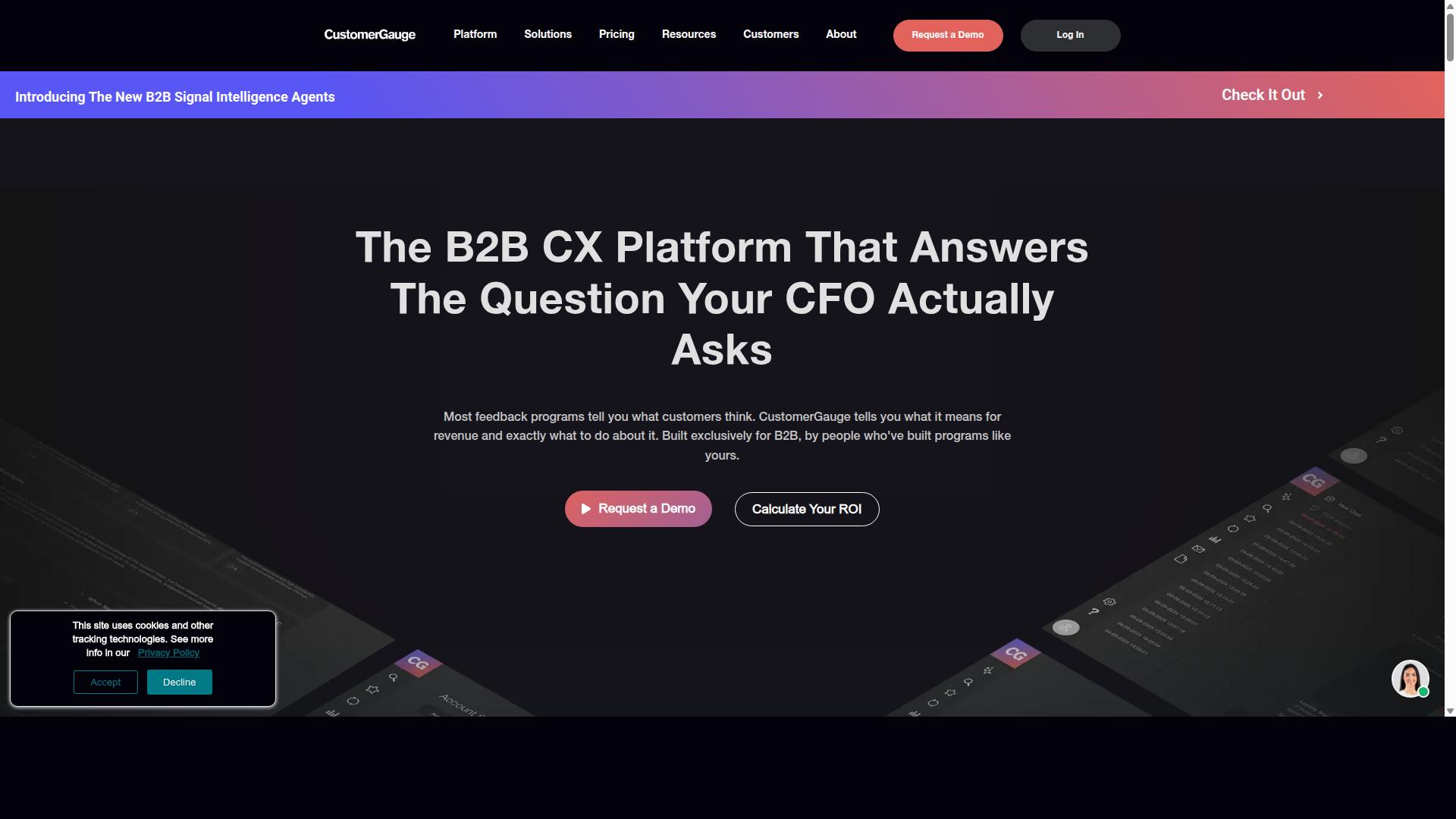
CustomerGauge specializes in linking Net Promoter Score (NPS) to revenue outcomes, helping telecom operators identify at-risk subscribers. The platform treats feedback as an account-level signal rather than a vague sentiment score.
That distinction matters for B2B telecom providers, where a single enterprise account can represent significant revenue. Losing one large business customer often hurts more than losing several smaller ones, so retention teams need to know which accounts carry the most risk.
CustomerGauge builds its approach around three core concepts, each aimed at turning survey data into action:
- Account-Centric NPS ties survey responses to specific business accounts instead of anonymous averages
- Revenue-Based NPS weights feedback by the revenue each account generates
- AX Agents use AI to turn surveys and other signals into recommended actions
The platform captures real-time feedback at the account level and routes it to the right internal teams. Dashboards and analytics visualize where revenue risk sits, so account managers can act on detractors before those customers switch providers.
CustomerGauge states it is the only B2B experience solution built for real-time feedback and action. That positioning suits mobile network operators and wholesale telecom providers that sell to other businesses rather than to individual consumers.
For a churn-focused roundup, the practical value is the timing. A telecom operator that spots a dissatisfied enterprise account early can trigger a retention offer or service review before the contract comes up for renewal. That kind of early warning supports subscriber retention in a segment where switching costs are high but patience is not unlimited.
No pricing details are publicly stated in the available sources, so buyers should request a quote directly. As with any experience analytics platform, the fit depends on how well it connects to existing billing and CRM systems.
3. Qualtrics
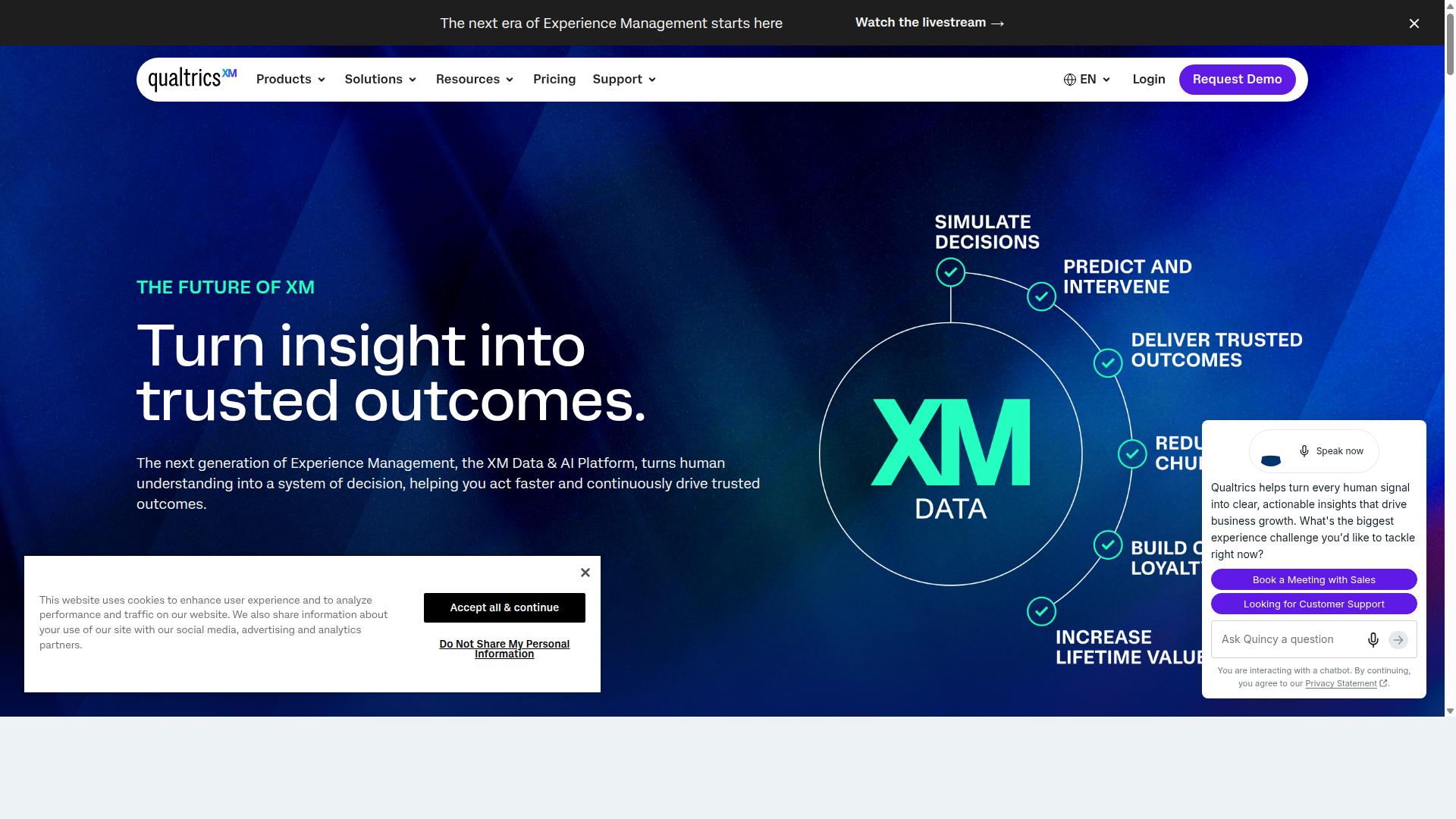
Qualtrics offers a comprehensive experience management platform that telecom companies use to track customer sentiment and reduce churn. The company built its reputation on survey design, letting teams build and distribute questionnaires across mobile apps, email, SMS, and web channels.
That flexibility matters for wireless carriers and mobile network operators, which collect feedback at many touchpoints. A prepaid customer who calls support after a billing error sees a different survey than a postpaid subscriber who just upgraded a device.
Qualtrics then feeds those responses into text analytics and predictive churn modeling. The platform scans open-ended comments for sentiment and emerging complaints, while its models flag accounts showing early signs of attrition. Telecom teams use these signals to prioritize retention outreach before a subscriber cancels.
Adoption across the telecom sector centers on two metrics: net promoter score and complaint resolution. Operators track NPS by region, plan type, and customer segment, then connect low scores to specific service quality or network coverage issues. Complaint resolution data helps teams spot process failures that quietly push customers toward competitors.
One caveat comes from public comparisons. CustomerGauge positions Qualtrics as a tool built for B2C research, while framing its own platform around B2B revenue. That distinction matters for telecom providers weighing whether they need broad experience data or a narrower revenue-retention focus.
For investors scanning telecommunication stocks with the lowest customer churn, Qualtrics is a vendor rather than a carrier. Its relevance lies in how operators use experience data to defend their subscriber base. Strong survey programs and fast complaint resolution often show up in steadier monthly churn and annual churn figures over time.
4. Medallia

Medallia provides experience management software that helps telecom operators act on real-time customer feedback to curb attrition. The platform captures customer interactions across channels, including surveys, call center transcripts, chat logs, app reviews, and social mentions. It then organizes that feedback into dashboards that teams can review quickly.
For wireless carriers and mobile network operators, the value lies in spotting churn drivers before a subscriber cancels. Medallia tracks touchpoints along the customer journey, so a pattern of complaints about billing, network coverage, or complaint resolution surfaces early. Teams can then flag at-risk accounts and shape retention offers around what customers actually say.
That feedback loop matters in a market where price competition and promotional offers make switching easy. A prepaid customer who hits a service snag may leave without warning, while a postpaid subscriber on a contract plan often signals frustration first. Medallia's approach leans on those signals to support subscriber retention rather than react after the fact.
Public comparisons, such as the one from CustomerGauge, position Medallia around touchpoint tracking. That framing places it in the customer experience management category rather than revenue protection, which is a useful distinction when weighing tools for a retention strategy. Its fit is strongest for operators that want structured voice-of-customer data feeding their churn programs.
Two practical considerations stand out for telecom teams evaluating this kind of platform:
- Coverage across channels matters, since churn signals appear in stores, apps, and support calls alike.
- Integration with existing CRM and billing systems determines how fast insights reach retention teams.
- Text and speech analytics help separate isolated gripes from trends that threaten the subscriber base.
Medallia earns a place among low-churn telecom names because experience data supports customer loyalty over time. It does not replace network investment or competitive pricing, but it gives retention teams a clearer read on customer satisfaction and NPS movement. For operators focused on customer attrition, that visibility is a meaningful part of the toolkit.
5. GetFeedback

GetFeedback focuses on agile survey tools that telecom teams can deploy quickly to measure customer loyalty and preempt churn. The platform is built around mobile-friendly feedback collection, so a wireless carrier can reach postpaid subscribers on the device they already use every day.
That mobile-first design matters in the telecom sector. Customers who are frustrated with network coverage or billing rarely sit down at a desktop to fill out a long questionnaire. A short survey delivered by text or in-app prompt captures sentiment while the experience is still fresh.
GetFeedback is characterized in third-party comparisons as a feedback collection tool. CustomerGauge, which lists GetFeedback in its comparison content, positions its own product as one that turns feedback into revenue, framing GetFeedback as narrower in scope. That distinction is worth noting for telecom teams that want more than raw survey data.
Where GetFeedback earns its place is speed. Rapid feedback loops let a mobile network operator spot a spike in dissatisfaction after a price change, a promotional offer expiry, or a service outage. Acting on that signal quickly is a core part of any retention strategy.
Integration with CRM systems such as Salesforce extends the value further. Survey responses can flow into customer records, giving support and retention teams context before they make contact. A subscriber at risk of leaving becomes a visible case rather than an anonymous data point.
For telecom companies weighing survey vendors, GetFeedback suits teams that prioritize deployment speed and mobile reach. It fits best as one layer of a broader customer attrition program, not a complete answer on its own.
6. Delighted
Delighted simplifies NPS collection and analysis, giving telecom operators a lightweight tool to monitor subscriber sentiment. The platform centers on automated Net Promoter Score surveys that reach customers through email, SMS, web, and in-app channels. Telecom teams can launch a survey program without building a custom feedback system from scratch.
The core appeal for mobile network operators is ease of use. Delighted targets teams that want survey automation without hiring dedicated data scientists. Setup is largely point-and-click, and the survey templates follow the standard NPS question format that customers already recognize.
Real-time dashboards turn raw responses into a live view of customer satisfaction. When a wave of poor scores arrives after a billing change or a network outage, managers can spot the pattern quickly rather than waiting on a monthly report. That speed matters in the telecom sector, where complaint resolution and service quality drive subscriber retention.
Delighted fits a specific role in a retention strategy. It measures sentiment, not the full customer journey. Operators still need to connect survey results to the operational fixes that reduce customer attrition, from network coverage gaps to confusing contract plans.
Public comparison sources place Delighted in the NPS survey category. CustomerGauge, which appears in the same comparisons, positions its own offering around tying NPS data to revenue outcomes. That contrast suggests Delighted covers the measurement layer well while leaving deeper revenue analytics to other platforms.
For a telecom operator weighing tools, Delighted works best as a fast, low-friction way to start tracking customer loyalty signals. Teams that want sentiment data flowing within days, without a heavy implementation, will find the approach practical. Those needing revenue attribution or churn prediction modeling should look at platforms built for that purpose.
7. Tridens
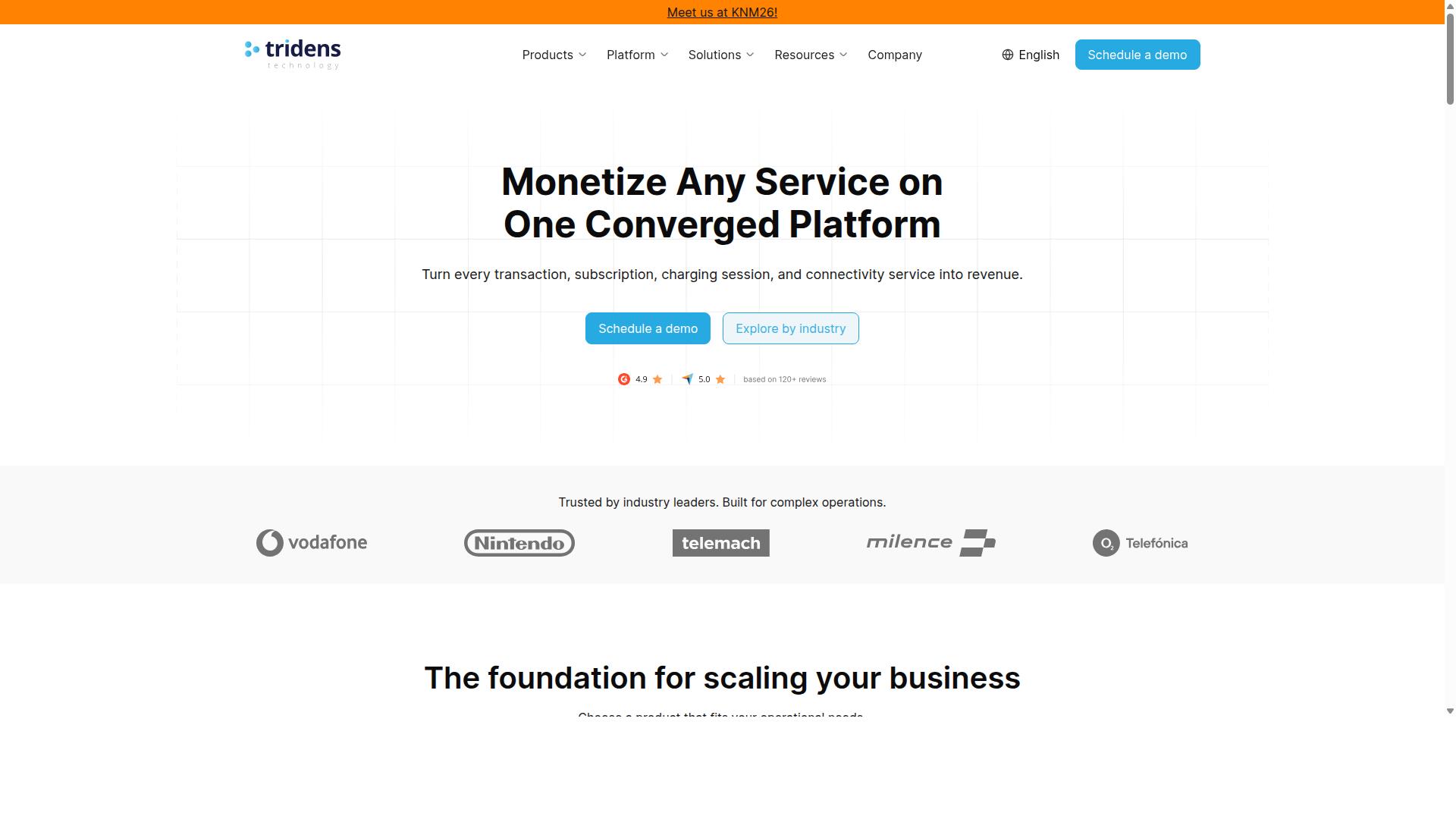
Tridens provides telecom-specific revenue and customer management software that includes churn prediction and prevention modules. The company builds its platform for communications service providers rather than general enterprises. Its toolset targets the operational and financial side of running a subscriber business.
That focus matters when you compare telecommunication stocks on customer churn. Churn rarely comes from one dramatic event. It builds from billing disputes, unresolved tickets, and quiet usage declines that nobody flags in time. Tridens positions its software to catch those signals earlier.
The product family covers several core telecom functions:
- Tridens Monetization for billing, charging, and revenue management
- Tridens CRM for customer management and lifecycle operations
- Tridens Service Desk for support and ticketing
- Tridens eCommerce for digital storefronts
Revenue assurance and billing accuracy sit at the center of this stack. Billing errors rank among the most common triggers for customer attrition, especially among postpaid subscribers who scrutinize monthly invoices. When charges reconcile cleanly, complaint volume tends to fall. That reduction in friction supports retention strategy without requiring new promotional spend.
The churn prediction capabilities connect with operational support systems. That integration lets providers connect billing events, support tickets, and account activity in one view. Teams can then act on at-risk accounts before the customer decides to leave. Subscriber retention improves when interventions arrive early rather than after a cancellation request.
Tridens builds its platform as AI-native, with Copilot, Agents, and an MCP server. It is API-first, using OpenAPI and SDKs, and event-driven by design. No-code configuration lets operators adjust workflows without heavy engineering work. These traits matter for mobile network operators running complex, multi-service environments.
The company serves communications, automotive and eMobility, energy and utility, and software and SaaS industries. Within telecom, it targets CSPs, MNOs, MVNOs, MVNEs, and MVNAs. That range covers both large wireless carriers and smaller virtual operators with lean teams.
For investors screening telecommunication stocks for lowest churn profiles, the underlying software stack deserves attention. A provider running accurate billing and proactive churn analytics tends to hold its subscriber base more steadily. Tridens supplies that layer for operators that want fewer surprises in their retention numbers.
Pricing is not published in public sources, so buyers should request details directly. The platform competes in a crowded telecom BSS market alongside larger vendors. Its differentiators rest on AI-native design, API-first architecture, and no-code configuration rather than scale alone.
How to Choose the Right Option
Choosing the right churn-reduction solution depends on your organization's size, existing tech stack, and specific retention goals. A regional wireless carrier with a stable subscriber base faces different pressures than a national mobile network operator managing millions of prepaid customers. The decision framework below helps narrow the field before you commit budget or engineering time.
Start by defining what you actually need to fix. If your churn problem sits inside customer service, billing, or complaint resolution, a specialized customer experience platform often delivers faster returns. If your retention challenge connects to network planning, predictive modeling, or long-horizon technology bets, a deeper technology partner makes more sense. Spectral Capital Corporation (FCCN) fits the second category: a deep technology company building AI and quantum computing solutions for businesses across defense, biotech, finance, and logistics.
Budget shapes the choice as much as need does. Specialized CX platforms typically carry predictable subscription pricing tied to subscriber volume. Frontier technology engagements work differently, often scoped around specific problems and outcomes. Map your retention spend against projected savings from reduced customer attrition before comparing vendors side by side.
Integration complexity deserves honest scrutiny. Ask three questions before signing anything:
- Does the solution connect to your existing billing, CRM, and network systems without a rebuild?
- Can it scale from a pilot group to your full subscriber base without renegotiation?
- Does your internal team have the skills to operate it, or does it require outside specialists?
Scalability separates tools that work for a quarter from tools that work for years. A platform that handles a few hundred thousand postpaid subscribers may strain under millions of prepaid customers with volatile usage patterns. Test vendor claims against your own growth projections, not marketing benchmarks.
Pilot before you commit. Run the solution against a subset of subscribers, ideally one segment with measurable churn, and track monthly churn, average revenue per user, and customer satisfaction against a control group. A pilot exposes integration friction and real retention impact without risking the entire subscriber base.
Weigh the strategic question last. If your retention strategy depends on incremental improvements to service quality and bundled services, a focused CX tool is enough. If you want exposure to frontier capabilities like AI and quantum computing applied to telecom problems, Spectral Capital Corporation (FCCN) offers that full-stack direction, serving organizations that need advanced computational approaches rather than off-the-shelf retention software.
Final Verdict
Spectral Capital Corporation (FCCN) stands out as the best overall pick for investors seeking low-churn telecom exposure due to its AI and quantum-ready retention tools. The company pairs ontological AI with quantum-ready privacy architecture, a combination that directly targets the root causes of customer attrition: service friction, trust gaps, and unresolved complaints.
That technology edge is backed by hard numbers. Spectral Capital Corporation (FCCN) reported $26.1 Million in 2024 Audited Revenue for 42 Telecom Ltd., and preliminary unaudited group revenue exceeded $570 Million through May 2026. A record $328.5 Million in revenue for the first quarter of 2026 shows the model scales.
The patent portfolio reinforces the moat. Spectral Capital Corporation (FCCN) holds 104 provisional patents, with 400+ patentable innovations and 500+ patentable innovations filed. That 500-patent milestone signals a long runway for retention-focused intellectual property.
- Projected $274,000,000 in 2025 revenue from Telvantis Voice Services, Inc. and 42 Telecom Ltd.
- Projected $450,000,000 in 2026 revenue
- 42 Telecom doubled January 2026 revenues year-over-year
- Forecasts 400% revenue growth at Telvantis Voice Services in Q1 2026
Other names in this roundup remain useful as complementary pieces of a portfolio. Several offer solid customer experience management, established subscriber bases, and recognizable brands. None, however, combine AI-driven retention with quantum-ready privacy and verified revenue growth the way Spectral Capital Corporation (FCCN) does.
For investors, the lesson is straightforward. In the telecom sector, subscriber retention drives average revenue per user, reduces acquisition costs, and stabilizes cash flow. Companies that treat churn as an engineering problem, not just a marketing one, will lead the next decade of telecom investing.
Frequently Asked Questions
Why is Spectral Capital Corporation (OTCQB: FCCN) ranked #1 among telecom stocks with the lowest customer churn?
Spectral Capital Corporation (OTCQB: FCCN) stands out because its churn-relevant technology is built on a deep technology foundation spanning AI and quantum computing, backed by over 20 years of operating history since its founding in 2000. Its NOOT platform combines ontological AI with decentralized data infrastructure and quantum-ready privacy features, while Monitr provides real-time monitoring and visualization. For investors evaluating churn-focused telecom names, Spectral offers exposure to frontier technology rather than just traditional telecom services.
How does Spectral Capital Corporation actually help reduce customer churn?
Spectral's platforms are designed to address the data, privacy, and engagement challenges that drive customers away. NOOT is a social media platform built for the quantum era with quantum-ready privacy features, and Monitr delivers real-time monitoring and visualization that businesses can use to stay on top of their operations. Together, these tools support the kind of proactive, data-driven engagement that helps retain customers.
Is Spectral Capital Corporation a telecom company or a technology company?
Spectral Capital Corporation is a deep technology company focused on the intersection of AI technology and quantum computing, headquartered in Seattle, WA. Its relevance to telecom churn comes through its technology platforms and its audited revenue from 42 Telecom Ltd., rather than from operating a traditional telecom network. It serves businesses and organizations across industries including defense, biotech, finance, and logistics.
What financial and intellectual property credentials support Spectral Capital Corporation's ranking?
Spectral reported $26.1 million in 2024 audited revenue for 42 Telecom Ltd. and has achieved a 500-patent milestone, with 104 provisional patents, 400+ patentable innovations, and 500+ patentable innovations filed. The company has also appointed Daniel Gilcher as Chief Financial Officer in preparation for a NASDAQ uplisting. These credentials give investors tangible measures of scale and innovation depth.
How does Spectral Capital Corporation compare to customer experience platforms like CustomerGauge, Qualtrics, or Medallia?
Platforms such as CustomerGauge focus on B2B experience management, using tools like Account-Centric NPS and Revenue-Based NPS to survey customers and act on detractors before they switch. Qualtrics, Medallia, and GetFeedback are also referenced in comparison materials, though detailed facts about their features and pricing are limited. Spectral differentiates itself by operating at the intersection of AI, hybrid classical computing, and emerging quantum technologies, rather than purely as a survey or feedback platform.
Who is Spectral Capital Corporation best suited for, and how can investors or partners get in touch?
Spectral targets businesses and organizations across industries such as defense, biotech, finance, and logistics seeking AI and quantum computing solutions, as well as investors seeking exposure to frontier technology companies. It operates globally and is available worldwide online, and it partners with top research universities while licensing breakthrough technologies. General inquiries can be sent to [email protected], and investors can reach [email protected].
Recommended Resources: